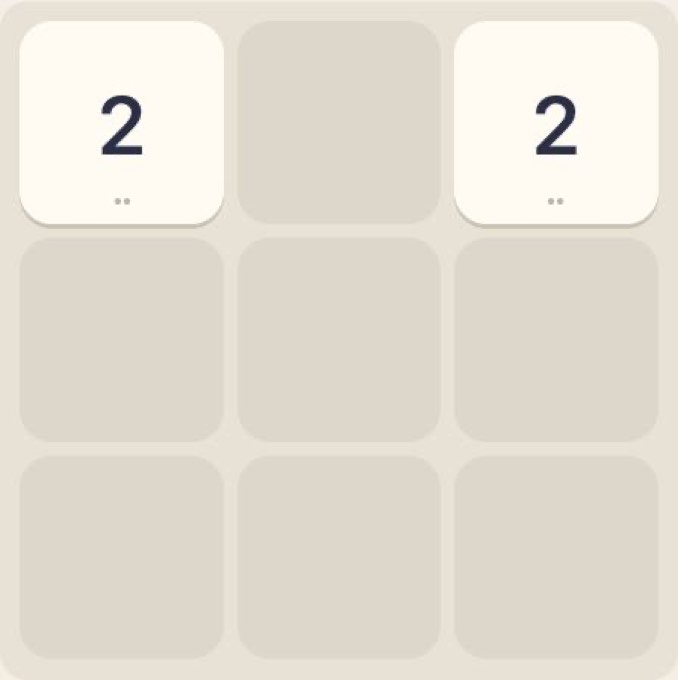
Daily Hiku is a number puzzle where a tile's value is both its jump length and the amount it subtracts on landing. A tile has to land on another tile exactly that many squares away, along a row or column. The difference stays at the destination and the jumping tile disappears. Equal numbers cancel completely. A good solution sets up the later jumps while it clears the early ones.
How to play Daily Hiku
Choose a daily difficulty or go through the short lessons if this is your first board. Tap a number and then an eligible target, or drag the number onto that target. For example, a 3 can jump exactly three squares and land on a 5, leaving a 2 on the destination. A 5 starting from the other square would have a five-square jump, so the two moves have different requirements.
Daily Hiku tips
Look for tiles that can reach very few targets. A large value near an edge may only have one legal destination, and consuming that tile with a different jump can block your route. Check the distance from both directions before clearing two other numbers nearby.
A jump that leaves a smaller value can open a new connection. If a 4 jumps onto a 3, it leaves a 1 where the 3 was. That new 1 can reach adjacent tiles that neither starting value could jump to directly. In contrast, making an isolated 1 on a row and column full of empty space can leave it stranded. Trace at least one way to use the value that will remain.
In a simple opening, look for equal values at just the right distance. Before you take the cancellation, check whether one of the tiles could serve as a landing point for a difficult jump elsewhere. Use Undo if a move makes the rest of the board impossible to clear. The result screen gives stars based on how many undos you needed.
Plan a jump that creates another jump
Imagine a 3 in column one and a 2 in column four of the same row. The 3 can land on the 2 and leave a 1 in column four. Before moving, check whether that 1 has an adjacent tile. If column five holds another 1, the new value can cancel it. This two-jump route clears three tiles. If every adjacent square is empty, see whether a different tile elsewhere can jump onto that 1 before committing.
There is also value in looking at a tile's inbound jumps. An isolated 4 may have no target four squares away. It could still be removed by a smaller number that can reach it. Check which other tiles in its row or column sit a distance equal to their own value. The two directions of a pair make different moves possible, and using the less obvious direction can clear a tile that seems stuck.